



petanque strategy for competitive tournaments complete guide
 hm.as.prod@gmail.com21 December 20252 Mins read23
Mastering Petanque Strategy for Competitive Tournaments: A Complete Guide
Petanque, a French outdoor game, requires skill, strategy, and a deep understanding of its intricacies. As a competitive player, you’ll need to develop a winning strategy to outmaneuver your opponents and claim the top spot. In this comprehensive guide, we’ll delve into the key aspects of petanque strategy, providing you with the tools to dominate any tournament.
Understanding the Basics
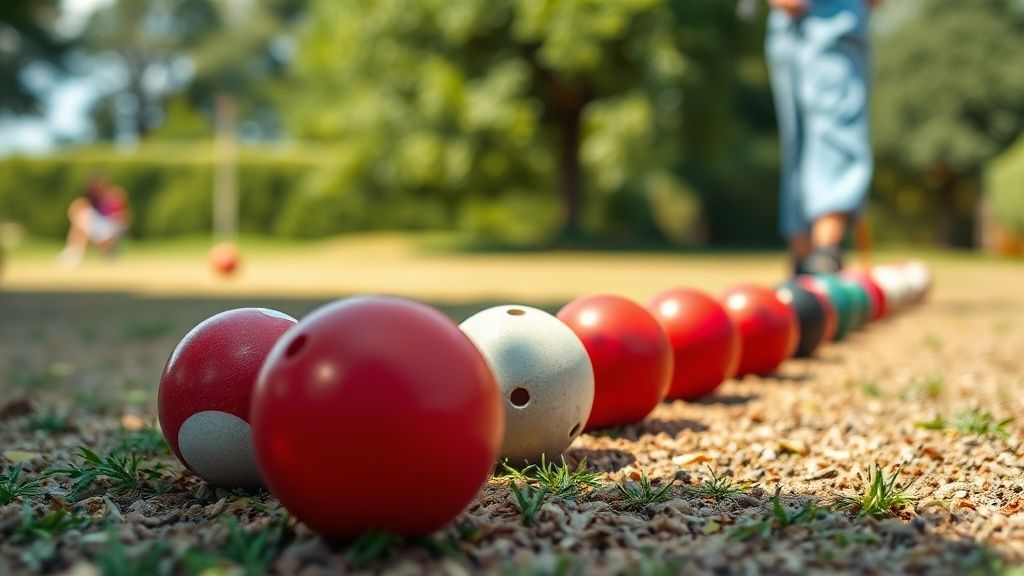
Before diving into advanced strategies, it’s essential to grasp the fundamental rules and objectives of petanque. The game involves throwing metal balls (boules) onto a court, aiming to get as close as possible to a smaller target ball (cochonnet). Points are scored when a player’s boule is closer to the cochonnet than their opponent’s nearest boule.
Familiarize Yourself with the Court
Every petanque court has its unique characteristics, and understanding the terrain is crucial for developing an effective strategy. Take note of the court’s dimensions, the location of any obstacles, and the wind direction. These factors will influence your shot selection and placement.
Choosing the Right Boules
Using the right boules can make a significant difference in your game. Typically, players use three boules: un, deux, and trois. The un is the heaviest and used for the first shot, the deux is medium-weight and used for shots in the middle distance, and the trois is light and used for shots in close proximity to the cochonnet.
Mastering Shot Types
There are several shot types in petanque, each with its own unique characteristics and applications. Some of the most common shots include:
- Drop shot: A shot that lands close to the cochonnet but not directly in front of it.
- Push shot: A shot that aims to push an opponent’s boule away from the cochonnet.
- Block shot: A shot that aims to block an opponent’s shot and prevent them from scoring.
- Curved shot: A shot that curves around an obstacle to reach the cochonnet.
Developing a Winning Strategy
The key to success in petanque lies in developing a well-rounded strategy that incorporates various shot types and techniques. Here are some essential tips to keep in mind:
- Start with a strong first shot (un) to establish control and set up your next shots.
- Use your deux for shots in the middle distance, and your trois for shots in close proximity to the cochonnet.
- Pay attention to the wind direction and adjust your shots accordingly.
- Identify your opponents’ strengths and weaknesses to develop a counter-strategy.
- Stay focused and adaptable, as the game can change quickly.
Benefits of a Well-Developed Petanque Strategy
- Improved shot accuracy and consistency
- Enhanced game awareness and decision-making
- Increased confidence and mental toughness
- Better adaptation to different court conditions and opponents
- More effective use of your boules and shot types
Frequently Asked Questions
Here are some common questions and answers to help you better understand petanque strategy:
- Q: How do I choose the right boules for my game? A: Select boules that suit your throwing style and the court conditions.
- Q: What’s the most important shot type in petanque? A: The drop shot is a crucial shot type that can greatly impact the game.
- Q: How can I improve my shot accuracy? A: Practice regularly, focus on your technique, and pay attention to the wind direction.
Conclusion
Petanque strategy is an art that requires patience, practice, and dedication. By understanding the basics, mastering shot types, and developing a well-rounded strategy, you’ll be well on your way to becoming a competitive petanque player. Remember to stay focused, adaptable, and always be willing to learn and improve. With persistence and the right mindset, you’ll be dominating tournaments in no time.









Leave a comment